CMHC Says Slowing Construction Threatens Affordability: What GTA Multifamily Owners Should Watch
CMHC says slower construction could undo affordability gains. Here is what GTA apartment owners should watch for capital planning, approvals and financing.
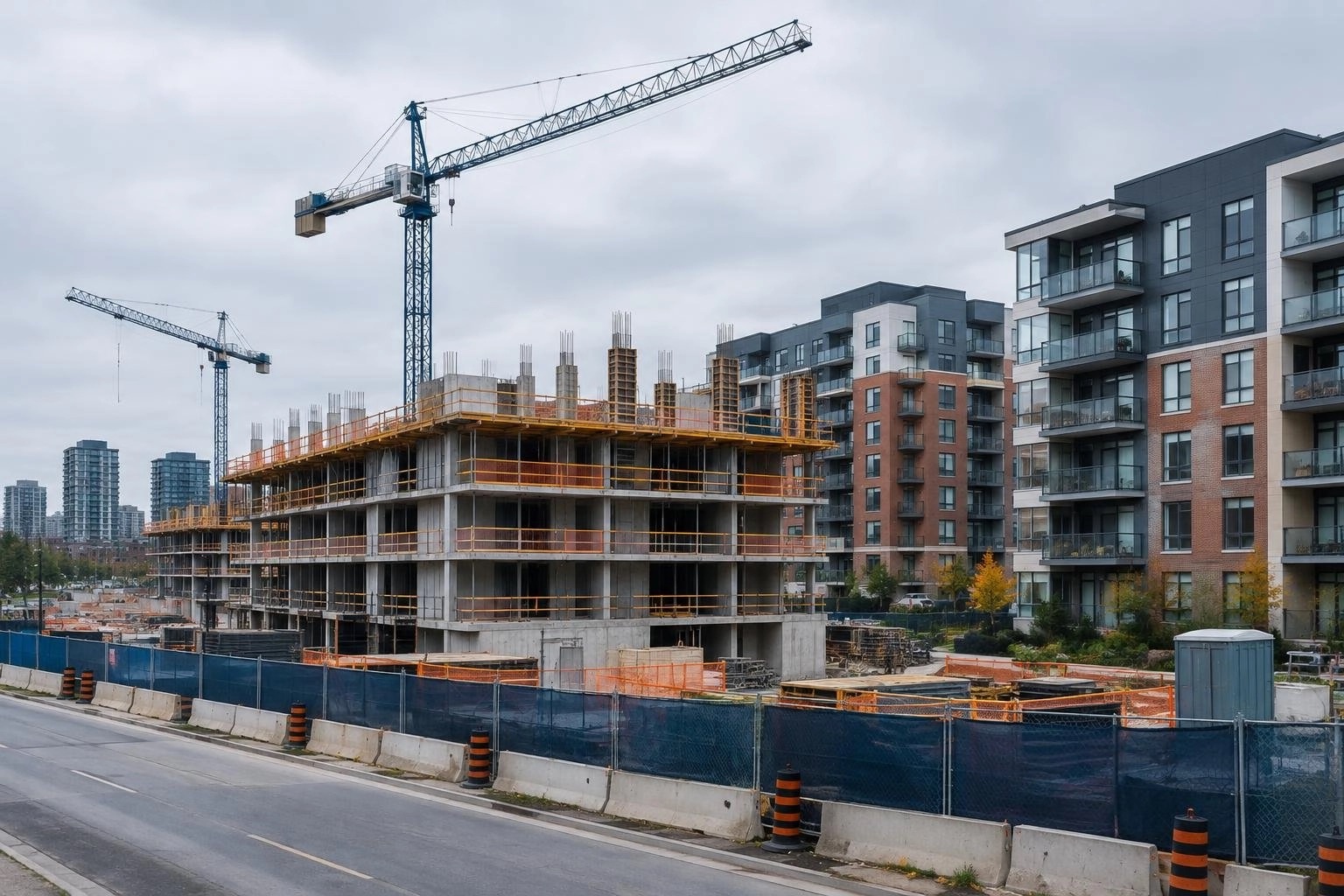
CMHC says slower construction could undo affordability gains. Here is what GTA apartment owners should watch for capital planning, approvals and financing.
CMHC’s latest housing supply update matters for GTA apartment owners because it points to a market that is still adjusting, but not yet building fast enough to keep long-term affordability on track. For owners, developers and asset managers, that has practical consequences. It affects renovation timing, contractor availability, planning risk, and how carefully capital work should be sequenced against financing and leasing plans.
On September 10, 2026, Canada Mortgage and Housing Corporation said recent affordability gains are at risk if home construction slows faster than demand. CMHC said Canada needs annual housing starts to rise to between 417,000 and 469,000 to restore affordability to pre-pandemic levels by 2036. CMHC also said the national housing supply gap is broadly unchanged from 2025, even though conditions differ across major markets.
For the GTA, the message is clear: the market is moving, but not evenly. CMHC said Toronto’s housing supply gap has narrowed since its July 2025 estimates, yet the ownership segment remains especially tight. CMHC also said that in Toronto, rental housing is driving the majority of new supply, while construction in the ownership market remains exceptionally weak. Toronto still needs annual housing starts to rise by at least 50% over the next decade to restore affordability to pre-pandemic levels.
What CMHC is saying about the market
CMHC’s national finding is not that housing conditions are fixed. It is that current construction patterns may not be enough if demand strengthens again. CMHC’s Deputy Chief Economist, Aled ab Iorwerth, said slower population growth has improved affordability somewhat, but that new construction is slowing faster than demand. CMHC warned that Canada could underbuild during a softer market and face a larger shortfall later.
For multifamily owners, that creates two separate planning issues:
- Rental supply may stay relatively supportive in the near term. CMHC said purpose-built rental apartments now account for about 60% of housing starts in Vancouver, and that more rental supply is helping rental markets move toward more balanced conditions. The Toronto release does not give a similar percentage for the GTA, but it does say rental housing is driving most new supply in Toronto.
- Ownership weakness can still matter to rental assets. When ownership supply stays constrained, some households remain in rental housing longer. That can support demand for well-located rental buildings, but it can also increase pressure on renewal strategy, amenity positioning and tenant retention.
Why this matters for renovation and capital planning
For apartment owners, the key takeaway is not to assume today’s conditions will last unchanged. A slower construction cycle can affect your project in several ways.
1) Renovation sequencing may need to be more deliberate
If contractor availability tightens again, major work may become more expensive or harder to schedule. Owners planning lobby upgrades, unit turns, mechanical replacements, envelope work or accessibility projects should look at sequencing early. Work that can be bundled efficiently may reduce re-mobilization costs and avoid delays.
2) Capital reserves should reflect longer lead times
CMHC’s outlook suggests that the market could remain uneven for some time. That means owners should review whether reserve assumptions still fit current replacement costs, permitting timelines and procurement risks. In practical terms, a capital plan that looked comfortable two years ago may now need more time and more flexibility.
3) Approval timing matters more when the market is shifting
If a building is planning a major renewal or repositioning project, approvals and permit timing should be treated as part of the project itself, not as an afterthought. Changes in municipal review timelines, contractor workloads and financing conditions can all affect the start date.
4) Financing readiness should be treated as a project milestone
Owners and authorized decision-makers should make sure documents are ready before committing to a work program. That includes updated scope, budget assumptions, reserve information, lender materials and a realistic construction schedule. The goal is not to predict the market perfectly. It is to avoid being caught unprepared if lending standards, pricing or lender timelines change.
What the GTA tables can add
CMHC said its September 24 GTA housing market tables provide August 2026 data for:
- starts
- completions
- units under construction
- inventory
That makes the tables useful for owners who want a current snapshot before finalizing a capital plan. A recent data check can help confirm whether the local market is absorbing new supply, where rental competition is building, and whether the timing of a renovation could overlap with a more active or quieter leasing period.
For owners, these tables are not a substitute for project underwriting. But they can help support a better internal discussion about:
- whether to advance or delay non-urgent capital work
- how to phase units in a renewal program
- whether to lock in contractor capacity sooner
- whether to build more contingency into budgets and schedules
Practical questions GTA owners should ask now
Before moving ahead with a significant capital program, it may help to ask:
- What work is time-sensitive, and what can wait?
- Do we have current pricing from contractors and consultants?
- Are permit and approval timelines realistic for this project?
- Do our reserve assumptions still fit today’s replacement costs?
- If financing conditions change, can the project still proceed in stages?
Those questions are especially important for larger multifamily buildings, where even a modest delay can affect occupancy, tenant experience and cash flow.
Bottom line
CMHC’s September 10 update is a reminder that construction volume still matters, even in a market that feels softer in the short term. Toronto’s supply gap has narrowed, but ownership construction remains weak and rental construction has carried much of the recent supply response. For GTA apartment owners, that means capital planning should stay disciplined, sequenced and data-driven.
A stronger plan today can reduce risk later if contractor capacity tightens or financing conditions shift. The safest approach is to review your project pipeline, confirm current market data, and build enough flexibility into both schedule and budget.
*General information only. Published September 25, 2026. This draft is not legal, financial, tax, or regulatory advice and should not be treated as a substitute for advice from qualified professionals.*
Official sources
- CMHC — Slowing home construction threatens recent affordability gains: https://www.cmhc-schl.gc.ca/media-newsroom/news-releases/2026/slowing-home-construction-threatens-recent-affordability-gains
- CMHC — Housing Market Tables: Selected South Central Ontario: https://www.cmhc-schl.gc.ca/professionals/housing-markets-data-and-research/housing-data/data-tables/housing-market-data/housing-market-tables-selected-south-central-ontario