Planning a Larger Construction Project Outside the GTA: What Makes It Feasible?
A practical guide for Ontario owners on when an out-of-GTA renovation or build may be feasible, and what to check before requesting an estimate.
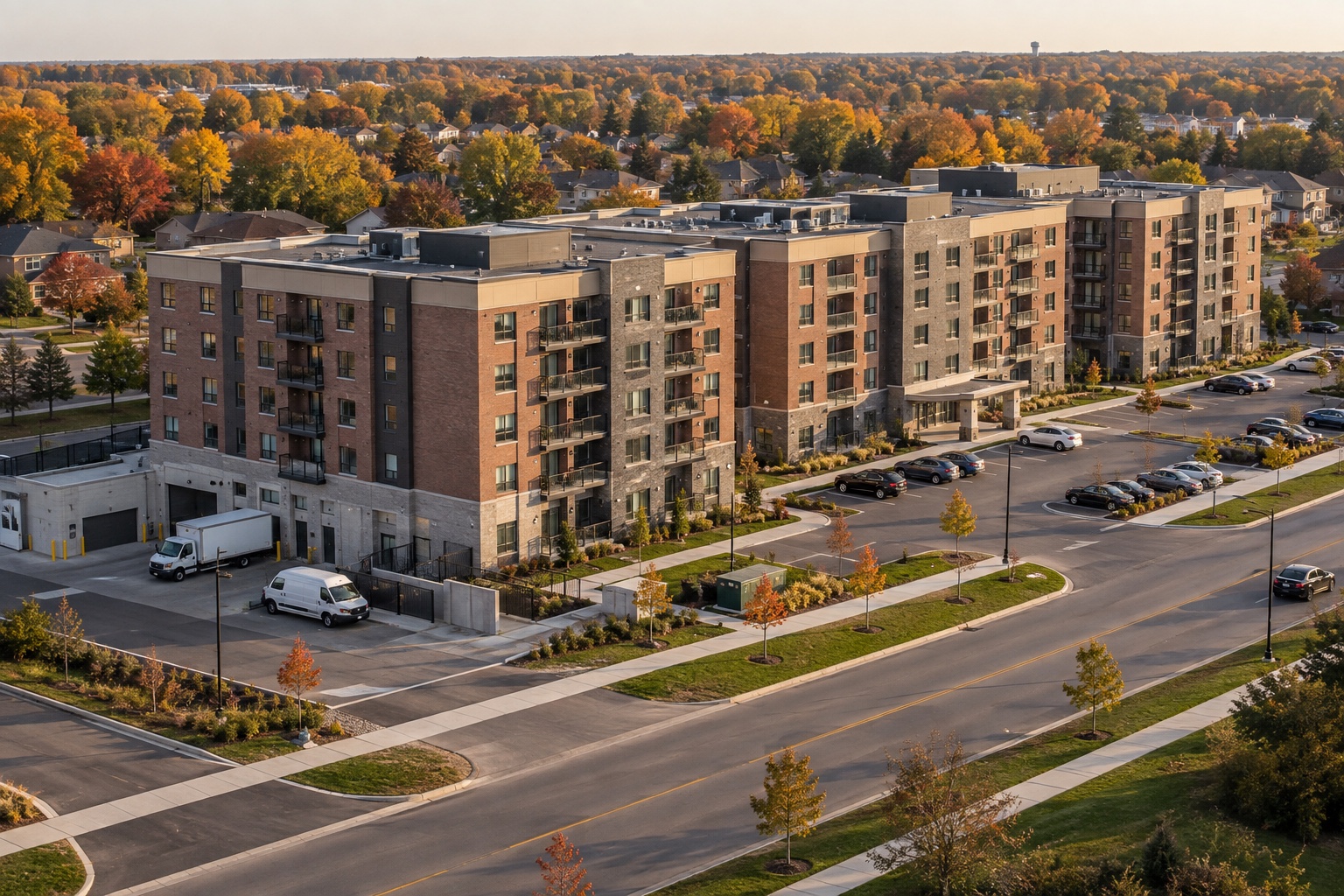
A practical guide for Ontario owners on when an out-of-GTA renovation or build may be feasible, and what to check before requesting an estimate.
Ontario owners often ask the same question: can this larger project be handled outside the GTA, and what makes it feasible? For apartment-building owners and commercial-property decision-makers, the answer usually depends less on the city name and more on the project’s scope, timing, access and readiness. Larger jobs can be assessed case by case, but the more prepared and repeatable the work is, the easier it is to review.
Atalla prioritises GTA construction and reviews larger projects elsewhere in Ontario individually when their scope and logistics justify the distance. A project’s location or budget alone does not guarantee acceptance. The key is to understand what makes an enquiry practical before asking for an estimate.
1) Start with the project type
Not every building project is the same. A straightforward interior renovation, a phased common-area upgrade, or a repeatable portfolio job is easier to assess than a highly customized one-off. The more the work can be clearly defined, the easier it is to evaluate.
For owners, a useful first question is: is this a defined construction scope, or still a moving target? If the answer is still changing, the project may need more planning before it is ready for contractor review.
2) Check whether the location is practical
Outside the GTA, location still matters, but it is not the only factor. A project may be more feasible if it is in a place with reasonable site access, workable schedules, and local trade availability. Projects in more remote areas can face extra coordination challenges, especially if the work needs multiple visits or a tight timeline.
For larger Ontario projects, decision-makers should think about how the site is reached, how materials can be delivered, and whether the schedule can handle a project that is not near the main market.
3) Make the scope easy to review
A clear scope helps everyone. Before requesting an estimate, have the following ready:
- a short summary of the building and unit or area count
- the main work categories, such as interior renovation, repairs or common-area improvements
- any phasing requirements
- expected timing or target start window
- site access limits, operating hours or tenant occupancy constraints
- any known approval steps that may affect the schedule
This does not need to be a perfect package. It just needs to be specific enough for a contractor to judge whether the project is realistic.
4) Think about repeatability
Repeatable work often travels better than highly bespoke work. If the same scope will be used across multiple units, floors or buildings, that can make the project easier to assess. Portfolio owners should highlight whether the work is a single site or part of a broader rollout.
Repeatability can help in three ways:
- it makes the scope easier to estimate
- it reduces uncertainty about materials and labour needs
- it helps contractors understand whether the work can be phased efficiently
If the project is a one-off, that is still fine. It just means the review may take more detail.
5) Review access, logistics and site constraints
Access can make or break a larger project. Commercial properties and apartment buildings often have more moving parts than a simple renovation. Consider elevator use, loading areas, parking, occupied spaces, service hours and any restrictions on noisy work.
For out-of-GTA work, logistics become even more important because trips, deliveries and coordination may be harder to manage. A strong enquiry explains the building conditions clearly instead of leaving the contractor to guess.
6) Check approvals and local coordination
Different Ontario projects can involve different approval paths. Owners should identify whether the work is straightforward maintenance, a planned renovation or a larger building improvement that may need extra coordination. The important part is not to overstate certainty. Just note what is already known.
If local approvals, building rules or scheduling constraints are still unclear, say so early. That helps avoid wasted time and helps the contractor decide whether the project is ready for the next step.
7) Be realistic about timing and decision readiness
A project is more feasible when the owner is ready to move. That means the decision-makers are known, the timing is reasonably clear and the project will not be delayed indefinitely after pricing or review.
Good timing includes:
- a workable target start window
- a clear decision process
- readiness to answer follow-up questions
- the ability to confirm site access and approvals
If these pieces are missing, an estimate may still be possible, but the project may not be ready for serious scheduling.
8) Self-qualify your out-of-GTA enquiry
Before reaching out, ask these questions:
- Is the project outside the GTA, and is it large enough to merit review?
- Is the scope clearly defined?
- Is the work repeatable or part of a portfolio?
- Can the site be accessed without major logistical barriers?
- Are local approvals, trades and timing reasonably workable?
- Is the decision-maker ready to move the project forward?
These answers help frame a project-fit discussion; they are not acceptance criteria or a commitment to provide a quote.
9) Use a simple submission package
A concise enquiry is often the most useful. Include the property type, location, scope summary, project size, schedule expectations and any access limits. If you have photos or drawings you are authorized to share, keep them available as supporting material and avoid including private resident information. The goal is to help the contractor decide whether the project fits the kind of work they can assess.
For Ontario owners, this is especially important when the project is outside the GTA. A well-organized brief makes it easier to evaluate whether the work is suitable for a larger regional review.
Conclusion
Large renovation projects in Ontario are not judged only by geography. They become more feasible when the scope is clear, the site is practical, the work is repeatable and the owner is ready to proceed. Outside the GTA, those details matter even more.
Planning a larger project outside the GTA? Request a construction estimate. Start with the municipality, building type and a short scope summary. We can then discuss whether the size, timing and logistics make the project a suitable fit.