Renovating an Older Building: Investigate Existing Conditions Before Demolition
Plan an older-building renovation around verified conditions, qualified assessment and documented unknowns before disruptive work begins.
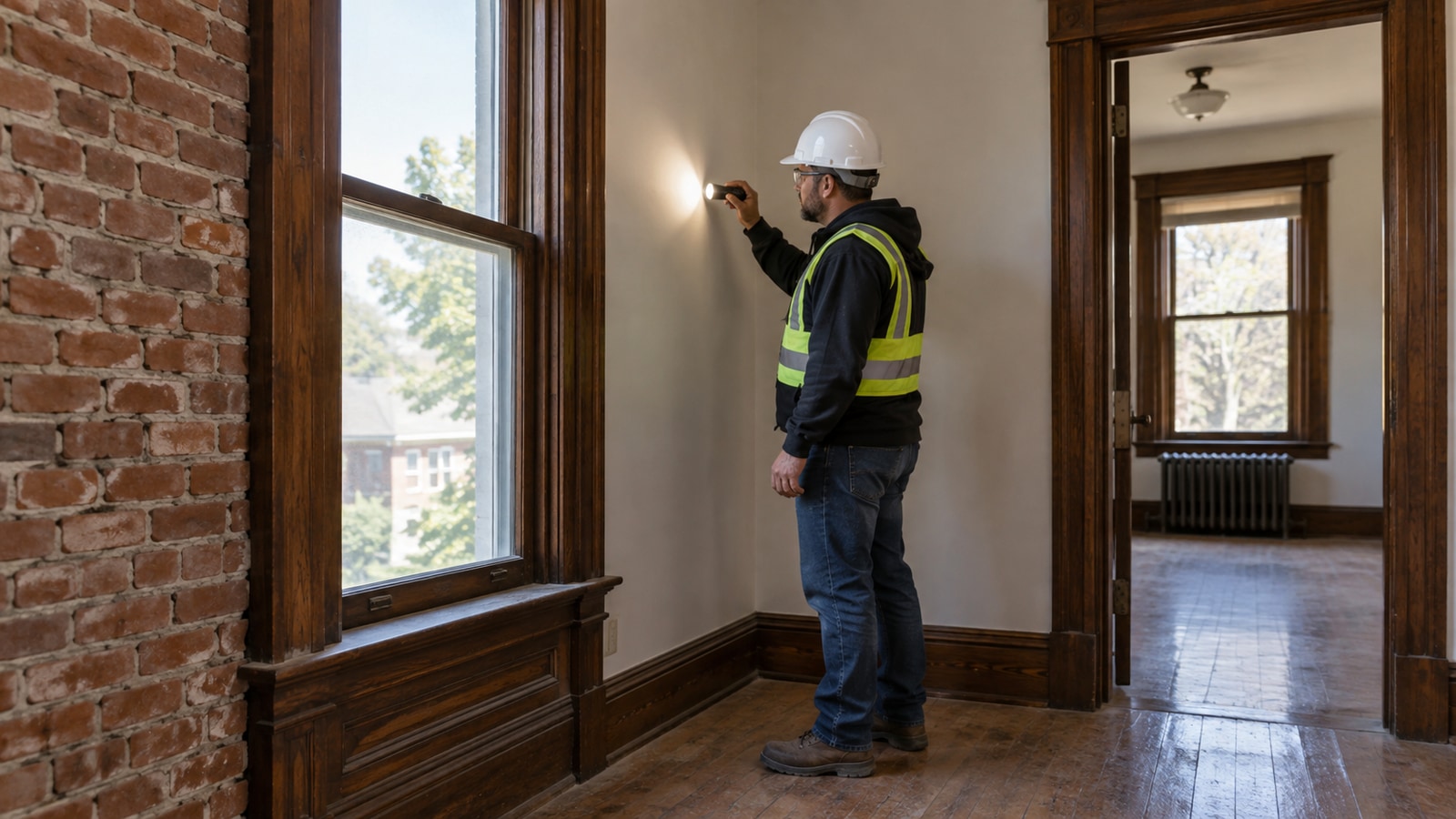
Plan an older-building renovation around verified conditions, qualified assessment and documented unknowns before disruptive work begins.
An older building can contain useful character and incomplete information at the same time. Before demolition begins, the project team needs to understand which parts of the plan are supported by evidence and which still rely on assumptions.
That does not mean every uncertainty can be removed. It means the owner should know where uncertainty remains, who will investigate it and how the findings could affect the scope or sequence of work.
Assemble the building's available history
Collect relevant plans, prior repair information, available permit records and service documentation. Ask which records reflect the current building and which may be incomplete or outdated.
Treat the history as a starting point, not automatic proof. A drawing can help a professional understand what to investigate without establishing that every concealed condition matches it. Similarly, a past repair invoice may explain what was attempted without confirming the present condition.
Keep useful observations from the owner's experience: where issues recur, what changes seasonally and which areas have been altered. Separate direct observations from second-hand explanations.
Use three categories: known, assumed and unresolved
A simple existing-condition register can record the item, available evidence, current status and required next step. This helps prevent an estimate or design from treating an assumption as a verified fact.
For example, an existing service location might be confirmed while its suitability for a proposed use remains unresolved. Those are different questions, and they may require different professionals to answer them.
Ask the project lead which unknowns could change the plan materially. Prioritise those investigations before committing to decisions that depend on them.
Arrange qualified assessment before disturbance
Structural, electrical, plumbing and other technical questions belong with appropriately qualified people. An owner walkthrough can identify concerns; it cannot establish a professional diagnosis or approval.
Health Canada warns against disturbing suspected asbestos yourself. Use qualified professionals when assessment is needed; consult its asbestos health-risk guidance.
Do not treat an online photograph as a way to identify hazardous materials. Nor should an exploratory opening be an informal first step simply because a wall will eventually be renovated. The relevant assessments, permissions and safety arrangements need to come first.
Connect investigations to a decision
Before commissioning further work, clarify what question the investigation is intended to answer and how the result will be used. This keeps the exercise focused on project decisions rather than collecting information with no defined purpose.
A hypothetical example: the proposed layout depends on changing an opening. The team identifies the relevant design question and arranges appropriate assessment before treating that alteration as confirmed scope. The estimate and schedule are then updated to reflect the findings.
The professional should determine the appropriate method and limits of the investigation. This article does not provide testing, demolition or hazardous-material handling instructions.
Review moisture as a condition, not just a finish problem
A damaged surface can be visible while the cause is not. Ask the appropriate professional to evaluate recurring moisture observations before specifying only a cosmetic repair.
Record what has been assessed, what was found and whether further work is recommended. Avoid translating “no issue observed during this visit” into a broader guarantee that no problem exists anywhere in the building.
Keep the investigation findings connected to the proposed work. If the result changes the scope, use a documented decision process so the owner can understand the options and implications.
Check approval and access implications
Changes discovered during planning may affect design or permit requirements. Toronto's building-permit guidance provides a starting point for Toronto work; use the responsible local authority and qualified advisers for the actual property.
An occupied building also needs an appropriate access and communication plan. Do not assume that technical investigation authorises entry or resolves tenancy questions. Arrange lawful access and obtain legal advice where the situation requires it.
Carry uncertainty honestly into the project plan
Some matters may remain unresolved until a properly planned stage of work. Record those dependencies and explain how decisions will be handled if new information appears. Avoid a false impression of certainty created by an overly precise start date or an unexplained allowance.
The owner should receive a clear summary: what is confirmed, what remains uncertain, the next investigation or decision, and the person responsible for it.
Good preparation does not eliminate every surprise. It makes the assumptions visible before they become commitments.
Planning a renovation to an older GTA property? Discuss the project with Atalla Group. Larger projects elsewhere in Ontario can be assessed case by case.
Further reading
General planning suggestions only; not engineering, safety or legal advice.