Rental Property Inspections: Turn Observations into Completed Repairs
Make rental property inspections useful with clear observations, assigned actions, privacy-conscious records and verification that repairs are complete.
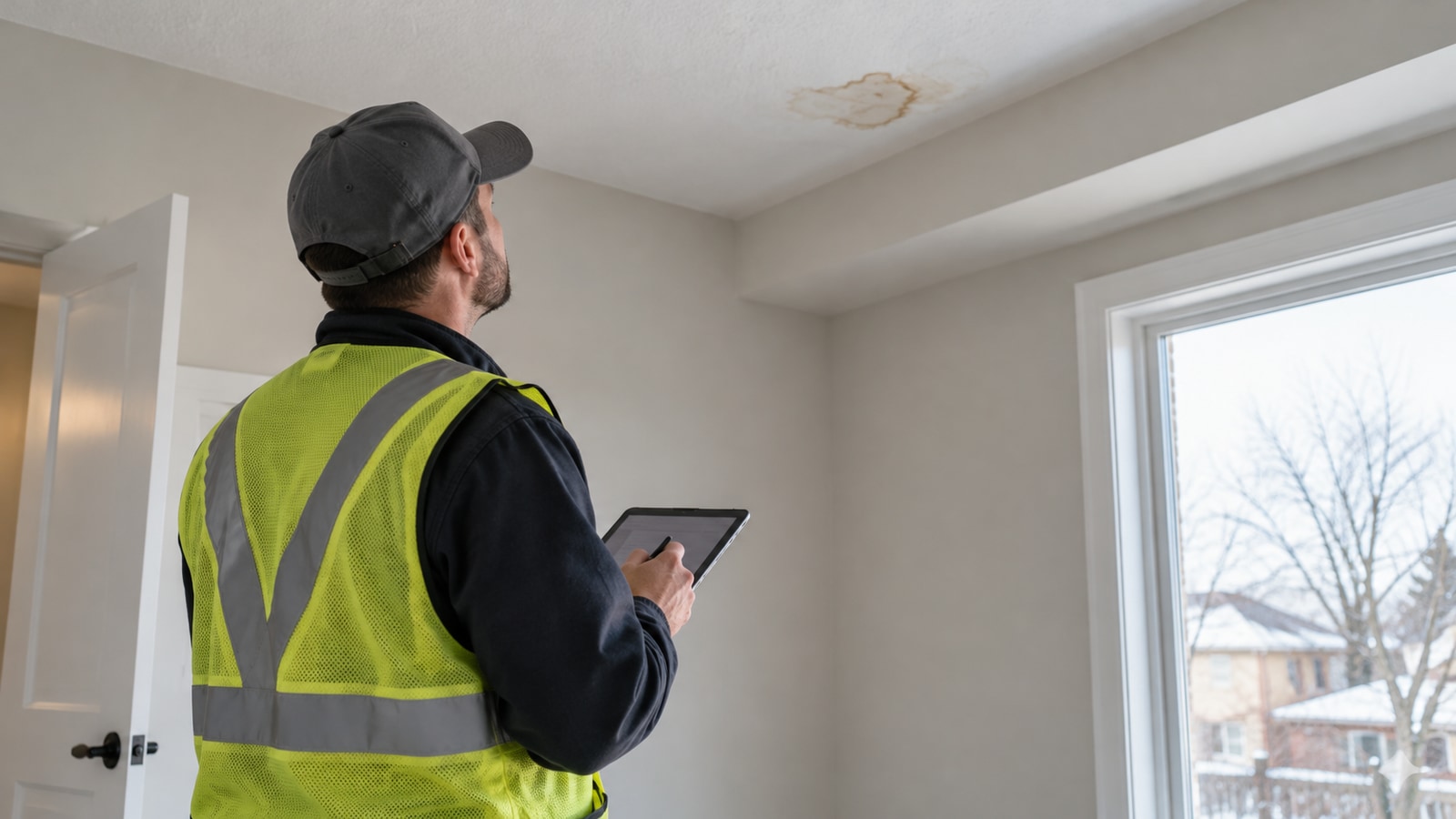
Make rental property inspections useful with clear observations, assigned actions, privacy-conscious records and verification that repairs are complete.
An inspection report does not repair a property. Its value comes from what happens next: somebody assesses the observation, agrees on an action, arranges the work and checks the result.
For rental-property owners, that follow-through is often more important than the length of the report. A concise record that reaches a verified conclusion is more useful than a folder of photographs with no clear next step.
Describe what you see before deciding what it means
Separate an observation from a diagnosis. “A stain is visible on the ceiling near the window” records a condition. “The roof is leaking” identifies a cause that may not yet be established.
This distinction helps the right professional investigate the issue. Record the location, date, relevant history and whether the condition has been reported before. Include resident information only where it is necessary to understand and address the problem.
If an observation suggests an immediate hazard, escalate it through the appropriate emergency or qualified response route. Do not leave an urgent issue in a routine report queue.
Plan access and photography carefully
Inspection access needs to be arranged lawfully for the particular situation. Check applicable notice, consent and exception rules rather than treating every visit as identical. The Landlord and Tenant Board's maintenance guidance addresses maintenance responsibilities and access considerations.
Before taking a photograph, ask what evidence is actually needed. Frame the condition rather than people's possessions, personal documents or occupants. Avoid collecting a whole-room image when a focused detail would serve the purpose.
Tenant information requires appropriate collection, use and safeguards. Refer to the Office of the Privacy Commissioner's landlord–tenant guidance and obtain advice where needed.
Give every actionable observation one coordinator
An issue can involve an owner, manager, resident and several trades. It still needs one person responsible for keeping the next step moving.
That coordinator does not need to perform the repair. Their job is to confirm who is assessing it, what decision is outstanding and when the file should be checked again. “Sent to contractor” is a progress update, not a completed outcome.
Use a practical status sequence: observed, assessment arranged, action agreed, work arranged, work completed, result verified. Adapt the language to the property, but avoid a single vague “in progress” label that hides the actual dependency.
Make the next action specific
A useful record answers these questions:
- What condition was observed, and where?
- Is immediate escalation required?
- Who is coordinating the response?
- What qualified assessment or other next step is needed?
- What owner decision is outstanding, if any?
- When will progress be reviewed?
- What evidence will show the issue can be closed?
Set a follow-up point appropriate to the condition. A target date is a coordination tool, not a reason to postpone an urgent obligation or a promise that every repair can be completed by that date.
Check the cause, not just the appearance
Consider a hypothetical ceiling stain that returns after repainting. Repeating the cosmetic work may make the room look better briefly without establishing why the stain reappeared.
A stronger process records the recurrence, arranges an appropriate investigation and distinguishes the underlying work from the later surface repair. The closure note then explains what was assessed and what evidence supports the conclusion. It does not simply say “painted.”
The same principle applies to a recurring door fault or repeated drainage observation: connect the history so the next professional is not starting from an incomplete picture.
Define closure before closing the file
Depending on the work, evidence may include a contractor report, a relevant invoice, an appropriate photograph or a follow-up observation. Some conditions need further professional confirmation or monitoring rather than an immediate “resolved” label.
Keep unresolved recommendations visible. A completed contractor visit can produce a new action rather than end the process. Record that new action and its coordinator before marking the original visit complete.
Give the owner a decision-ready summary
The owner should be able to see what needs attention, what requires approval and what has been verified. Avoid burying those decisions in a long photo attachment or a stream of disconnected messages.
Atalla Group supports rental-property owners across Ontario. Talk with us about property management and inspection follow-through.
Further reading
These are general process suggestions, not legal advice or a property inspection standard.