What Should a Rental Property Owner See in a Monthly Management Report?
Learn what every rental property owner should look for in a monthly management report, from cash flow to arrears, expenses, and lease status.
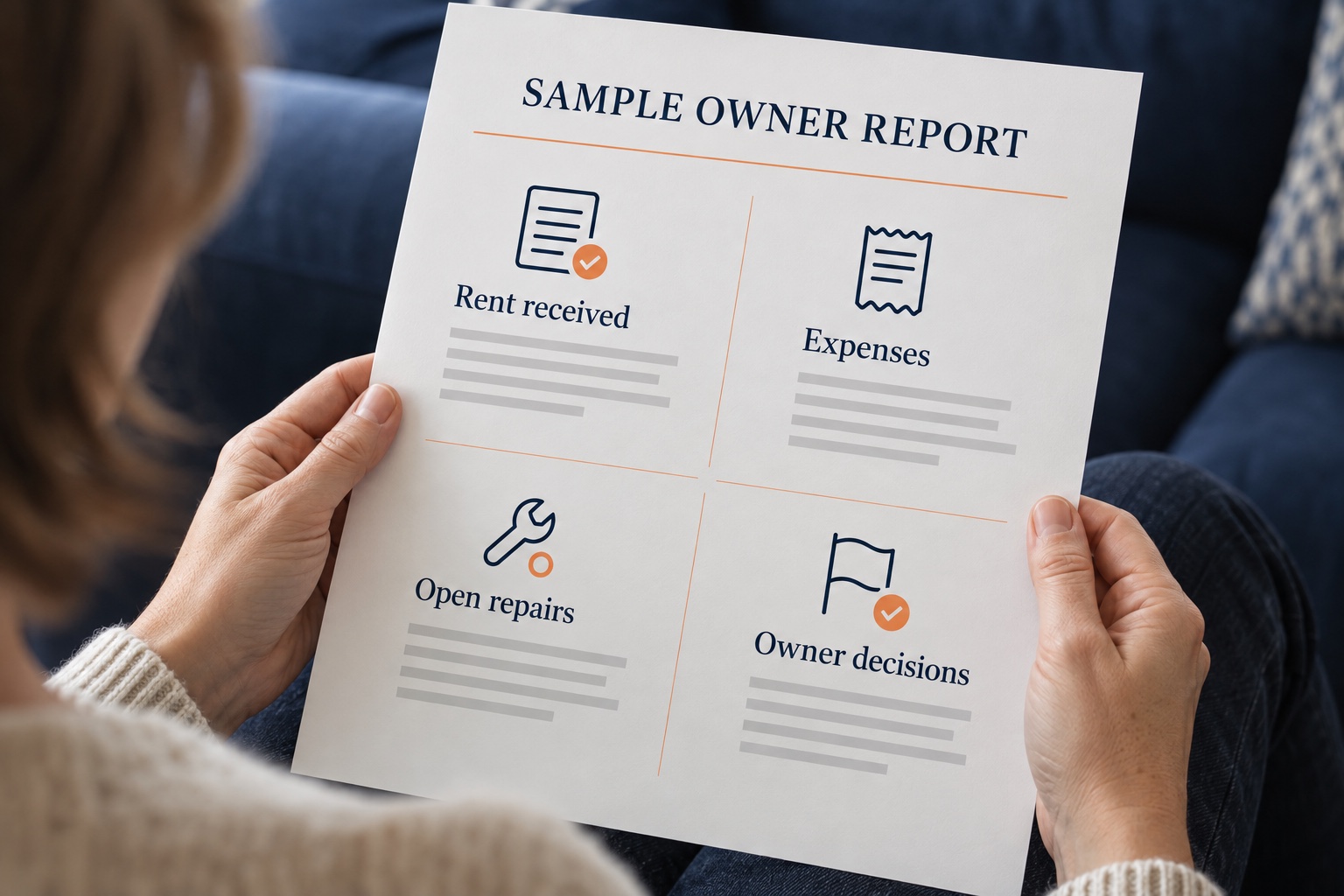
Learn what every rental property owner should look for in a monthly management report, from cash flow to arrears, expenses, and lease status.
A useful monthly owner report should answer three questions: what happened at the property, where did the money go, and what needs your decision? A balance alone is not enough. An Ontario rental owner should be able to connect the financial summary to the rent ledger, supporting expenses and work still outstanding.
Use the following checklist when evaluating a manager or reviewing your next statement. Agree the reporting scope and timing in your management agreement; not every system presents information in the same format.
1. A clear explanation of cash movements
Look for the opening balance, money received, payments made, transfers or owner distributions, and the closing balance for the reporting period. Owner contributions and other adjustments should be identifiable rather than hidden inside a total.
Ask how the statement reconciles to the account records and which funds are available for upcoming property expenses. A month-end statement describes a period that has ended; it does not replace a current cash update when a major bill is about to fall due.
2. Rent billed, received and still outstanding
A unit-level rent ledger helps you distinguish amounts charged from amounts collected. Ask for outstanding balances, how long they have been outstanding, and a concise update on follow-up activity.
A useful entry identifies the issue and next action without exposing unnecessary tenant information. Any formal tenancy action should be handled through the appropriate process with qualified advice where needed; an owner report is not a substitute for that advice.
3. Expenses you can trace to supporting records
Paid expenses should have a meaningful description, amount, date and supporting invoice or receipt. Ask how approvals are recorded, including urgent work handled under the authority in your agreement.
Approved but unpaid invoices and expected commitments should be distinguishable from amounts already paid. Otherwise, a healthy-looking closing balance can be misleading when several bills are about to arrive.
For an unfamiliar charge, ask what was supplied, which property it relates to and whether any management or coordination fee is included.
4. Open maintenance and upcoming work
Separate completed work from open requests and planned work. For an open item, useful details include the date reported, current status, person responsible and next step.
Flag anything awaiting an owner decision. For example: a repair estimate, an access arrangement or a choice between further investigation and replacement. Set a response deadline that reflects the issue rather than treating every request as equally urgent.
Recurring maintenance belongs on a forward-looking list. The report should help you plan, not simply explain last month's invoices.
5. Occupancy and leasing activity
Ask for a clear distinction between occupied units, confirmed upcoming vacancies, units being prepared and units actively marketed. A lease date alone should not be treated as proof that a unit will become vacant.
For a vacant unit, look for days vacant, preparation progress, asking terms and marketing activity. If the leasing plan is not producing suitable enquiries, the report should identify what will be reviewed next, rather than implying an outcome is guaranteed.
6. Decisions and an explanation of unusual changes
Put decisions near the top of the report: the recommendation, estimated cost, alternatives where relevant and response required. Significant differences from the previous period should have a plain-language explanation.
Remember that cash movement, operating performance and taxable income are different views of the property. Financing, owner contributions, major works and payment timing can affect them differently. Give your accountant the underlying records rather than treating the management statement as a tax calculation.
What to ask in an owner-portal demonstration
Atalla Group offers owner-portal reporting so owners can stay informed about their property and financials. Before appointing any manager, ask which records are available, how current they are, how documents can be obtained and who answers questions. Confirm the features and reporting arrangements for your specific property.
Turn information into a manageable routine
Start each review with outstanding decisions, then cash commitments, arrears and open work. Keep questions in one short list and agree who will resolve each item. The objective is visibility without making ownership a second full-time job.
Want to understand what a clearer reporting arrangement could look like for your rental? Request a free property management assessment. Share the property location, approximate unit count and the reporting problems you want to solve.