Winter-Ready Rental Properties: An Ontario Owner’s October Checklist
Prepare your Ontario rental property for winter with a practical plan for heating, drainage, snow service, resident communication and follow-up.
Prepare your Ontario rental property for winter with a practical plan for heating, drainage, snow service, resident communication and follow-up.
October is a useful time to ask a simple question about your rental property: if cold weather arrived tomorrow, which important jobs would still depend on somebody remembering to do them?
Winter preparation is not just a list of repairs. It is a short operating plan that connects each observation to a responsible person, a next step and evidence that the work is complete. For an owner, that makes the difference between knowing a problem exists and knowing it has been handled.
Start with unresolved issues, not a blank checklist
Review the building's open work orders, recent resident reports and last winter's recurring problems. Look for issues that were temporarily managed but never properly closed: a draft reported more than once, water collecting near an entrance, or an unreliable door closer.
Separate urgent hazards from seasonal preparation. An immediate safety concern needs the appropriate emergency response or qualified assessment; it should not wait for a planned autumn visit. Routine preparation can then be arranged around the property's condition, access requirements and service-provider availability.
For each open item, record what is known and what still needs investigation. “Water collected beside the rear entrance after rain” is a useful observation. “The foundation needs replacing” is a diagnosis that requires appropriate expertise.
Give heating and combustion equipment a named lead
Confirm who arranges qualified servicing, receives the service report and follows up on recommendations. A booked appointment is not the same as a completed service, and a completed visit is not proof that every recommendation has been resolved.
Health Canada recommends professional maintenance of fuel-burning appliances and appropriate carbon monoxide alarms. Consult its carbon monoxide prevention guidance alongside local requirements and qualified advice.
Keep equipment information and relevant service contacts somewhere the authorised response team can access. Do not leave gas, electrical or heating work to an informal checklist or an unqualified person.
Check the outside from safe locations
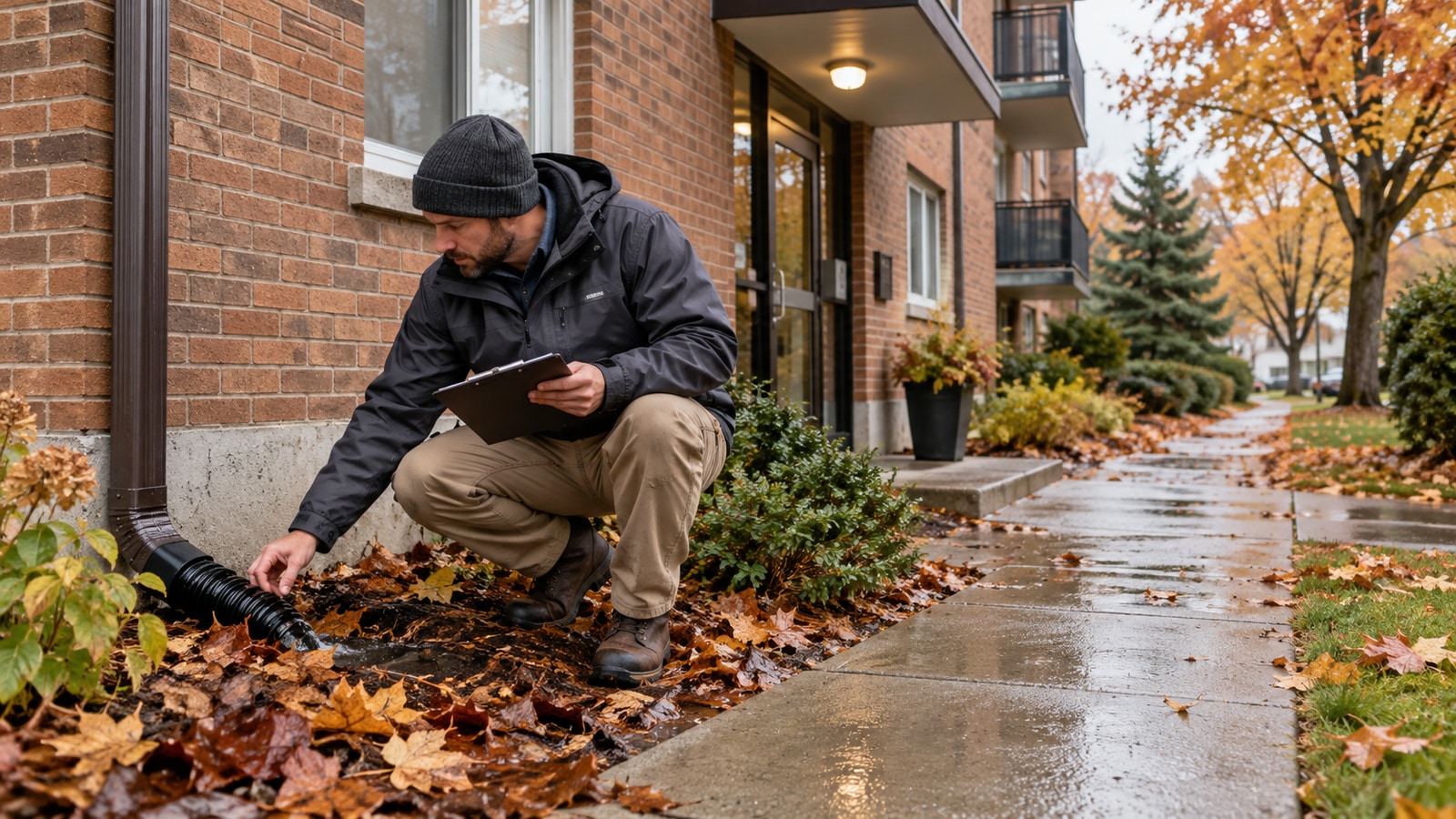
A ground-level walk can identify observations worth referring to a contractor: disconnected downspouts, leaves collecting around drains, a damaged entrance surface or an outdoor tap that needs seasonal attention.
Ask the appropriate professional to assess anything requiring roof access, ladders, excavation or technical diagnosis. The aim is to notice and assign, not to turn an owner walkthrough into hazardous maintenance work.
The City of Toronto provides frozen-pipe prevention guidance. Use it as a starting point for a property-specific conversation, not as a substitute for professional plumbing advice.
Confirm what snow service actually covers
Review the agreed areas and responsibilities before the first snowfall. Does the service arrangement address the entrance route, steps, parking access and any other relevant areas? Who reports a missed area or changing condition? Where can snow be placed without creating an obstruction?
Document the contractor's scope and escalation contact. Avoid assuming that one visit, one product or one generic service description resolves every winter condition. The property needs a way to identify and respond to changing conditions between planned visits.
Make resident communication easy to use
A concise seasonal message can explain how to report heating concerns, leaks or access problems and which number to use for urgent issues. Keep it specific to the building and avoid promising response times your team has not committed to delivering.
Ask for useful details such as the location, what was observed and when it began. Do not encourage residents to inspect electrical equipment, enter restricted service areas or perform unfamiliar repairs.
Use a five-column completion record
For every seasonal item, capture:
- Task: the observation or required preparation.
- Responsible person: one named coordinator.
- Next step: an assessment, booking, approval or repair.
- Target date: a realistic follow-up point, with urgent issues handled separately.
- Completion evidence: a service report, invoice, appropriate photograph or verified inspection note.
In a hypothetical example, a manager observes leaves collecting near a drain. The coordinator arranges an appropriate contractor visit, records the findings and confirms the recommended work. If the condition recurs, the record supports a fresh assessment rather than another assumption that the issue was solved.
Keep the plan active through winter
The October checklist is a starting point. Review unresolved items after significant weather, new resident reports and contractor recommendations. A short, current list is more useful than a detailed document nobody updates.
Atalla Group works with rental-property owners across Ontario. Talk with us about your seasonal property-management plan.
Further reading
This article offers general operating suggestions, not a safety inspection or a determination of compliance.
This article provides general information only and is not legal advice. Obtain qualified advice for your property, project or circumstances.